


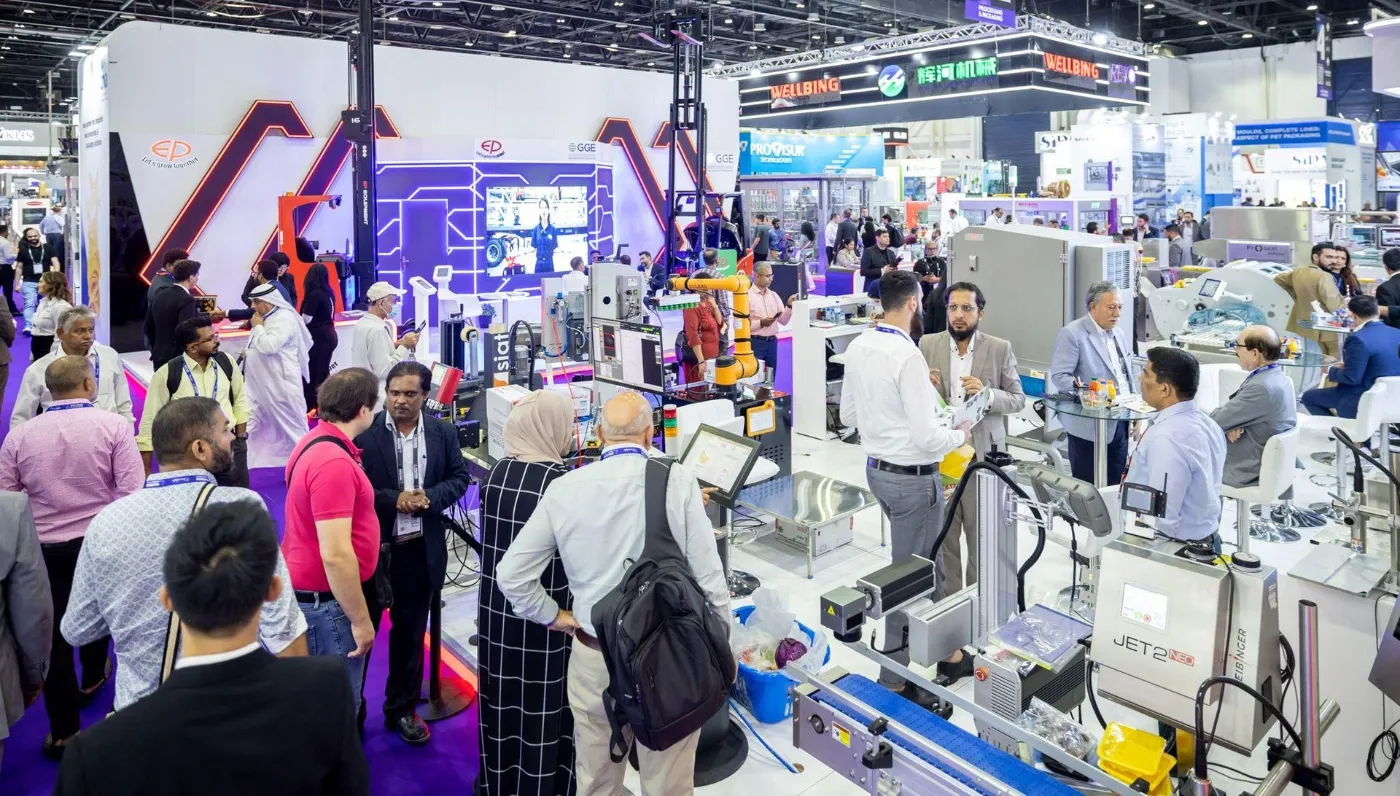
Are you attending Gulfood Manufacturing Dubai 2026 and considering expanding your food business into the UAE? Whether you are a food manufacturer, international distributor, food importer, exporter or entrepreneur, Dubai offers opportunities to establish a company and access markets across the Middle East, Africa and Asia.
Taking place from 3 to 5 November 2026 at Dubai World Trade Centre, Gulfood Manufacturing brings together international businesses involved in food processing, packaging, ingredients, automation and supply chain solutions.
For entrepreneurs exploring business setup in Dubai, the exhibition is an opportunity not only to discover new products and technologies but also to evaluate how to establish a food manufacturing company, obtain a foodstuff trading license or develop an international import-export business in the UAE.
With professional support from FZM Solutions international investors can explore Mainland and Free Zone company formation options and identify the appropriate licensing structure for their food industry activities.
1. Gulfood Manufacturing 2026: A Major Opportunity for Food Industry Entrepreneurs
Gulfood Manufacturing is one of the leading international events dedicated to food and beverage manufacturing technologies.
The 2026 edition is expected to welcome more than 2,500 exhibitors, bringing together food manufacturers, machinery suppliers, ingredient producers, technology providers and international investors.
The exhibition covers five major sectors:
Ingredients: Food ingredients, additives, flavours, raw materials and product development.
Processing: Food processing machinery, production equipment and industrial technologies.
Packaging: Packaging machinery, materials, labelling and sustainable packaging solutions.
Supply Chain Solutions: Warehousing, transportation, cold-chain logistics and distribution.
Control & Automation: Industrial automation, robotics, monitoring systems and smart manufacturing technologies.
For international companies, Gulfood Manufacturing offers an opportunity to meet potential distributors, identify new suppliers, evaluate market demand and establish business partnerships.
However, many entrepreneurs discover that having a registered UAE company can provide a stronger foundation for developing these relationships over the long term.
2. Why Dubai Is an Attractive Destination for Food Business Setup
Dubai has established itself as a major international business and logistics hub.
Its infrastructure, connectivity and commercial environment make it attractive to entrepreneurs looking to enter the food and beverage industry in the UAE.
Strategic Access to Global Markets
Dubai connects international trade routes linking Europe, Africa, Asia and the Middle East.
A food trading company established in Dubai can potentially serve customers and distributors in markets such as Saudi Arabia, Oman, Qatar, Bahrain and other regional destinations.
For example, a European food manufacturer may establish a Dubai company to coordinate wholesale orders, regional distribution and relationships with Gulf-based importers.
Similarly, agricultural exporters from Morocco, Tunisia, Egypt or other African markets may use a UAE entity to develop international trading operations.
100% Foreign Ownership
Foreign investors can generally establish eligible Mainland or Free Zone companies with 100% foreign ownership.
This allows international entrepreneurs to maintain ownership and control of their businesses without automatically requiring a UAE national shareholder.
Certain regulated activities and specific structures may have additional requirements.
Advanced Logistics Infrastructure
Dubai provides access to international ports, airports, distribution centers and specialized warehousing facilities.
This infrastructure is particularly relevant to businesses handling:
Frozen foods and refrigerated products
Meat, seafood and dairy products
Packaged and processed foods
Agricultural commodities
Beverages and food ingredients
Food processing equipment
Packaging materials
Businesses dealing with perishable goods must also consider temperature control, storage conditions, transportation standards and food safety compliance.
Competitive Tax Environment
The UAE offers a competitive corporate tax environment.
Under the general Corporate Tax regime, taxable profits up to AED 375,000 are subject to a 0% rate, while taxable profits above that threshold are generally taxed at 9%.
Qualifying Free Zone companies may benefit from a 0% Corporate Tax rate on qualifying income if they meet the applicable requirements.
The standard UAE VAT rate is 5%.
These rules make tax planning and choosing the correct business structure important for international food businesses.
3. What Types of Food Businesses Can You Establish in Dubai?
The UAE offers licensing options for a wide range of food-related commercial and industrial activities.
Foodstuff Trading Company
A foodstuff trading license can allow a company to undertake authorized wholesale and commercial trading activities involving food products.
Depending on the approved license activities and regulatory permissions, businesses may deal in packaged foods, dry groceries, canned products, frozen goods and other food categories.
This structure may suit international suppliers looking to sell products to UAE distributors, wholesalers, hotels, restaurants and supermarkets.
Food Import and Export Company
A food import-export business can be suitable for companies sourcing products internationally and distributing them to regional customers.
Entrepreneurs may establish operations focused on agricultural commodities, packaged food products, ingredients or other permitted categories.
Importing food into the UAE market requires compliance with applicable customs and food safety procedures.
Food Manufacturing and Processing Company
Investors planning to establish a production facility can explore industrial licensing options for activities such as:
Food processing and preservation
Bakery and confectionery manufacturing
Beverage production
Dairy processing
Food packaging and preparation
Ready-meal production
Food ingredients manufacturing
Industrial activities typically require suitable premises, machinery, technical approvals and compliance with relevant safety and environmental regulations.
Food Packaging and Distribution Business
The food packaging sector offers opportunities for companies supplying packaging materials, processing equipment, labelling technologies and distribution solutions.
Some businesses may only require a commercial trading license, while others operating packaging or manufacturing facilities may require industrial approval.
Food E-commerce and Online Distribution
Entrepreneurs can also explore online food retail and distribution models.
However, an e-commerce license alone does not necessarily authorize the storage, handling, importation or sale of regulated food products. Additional permissions may be required.
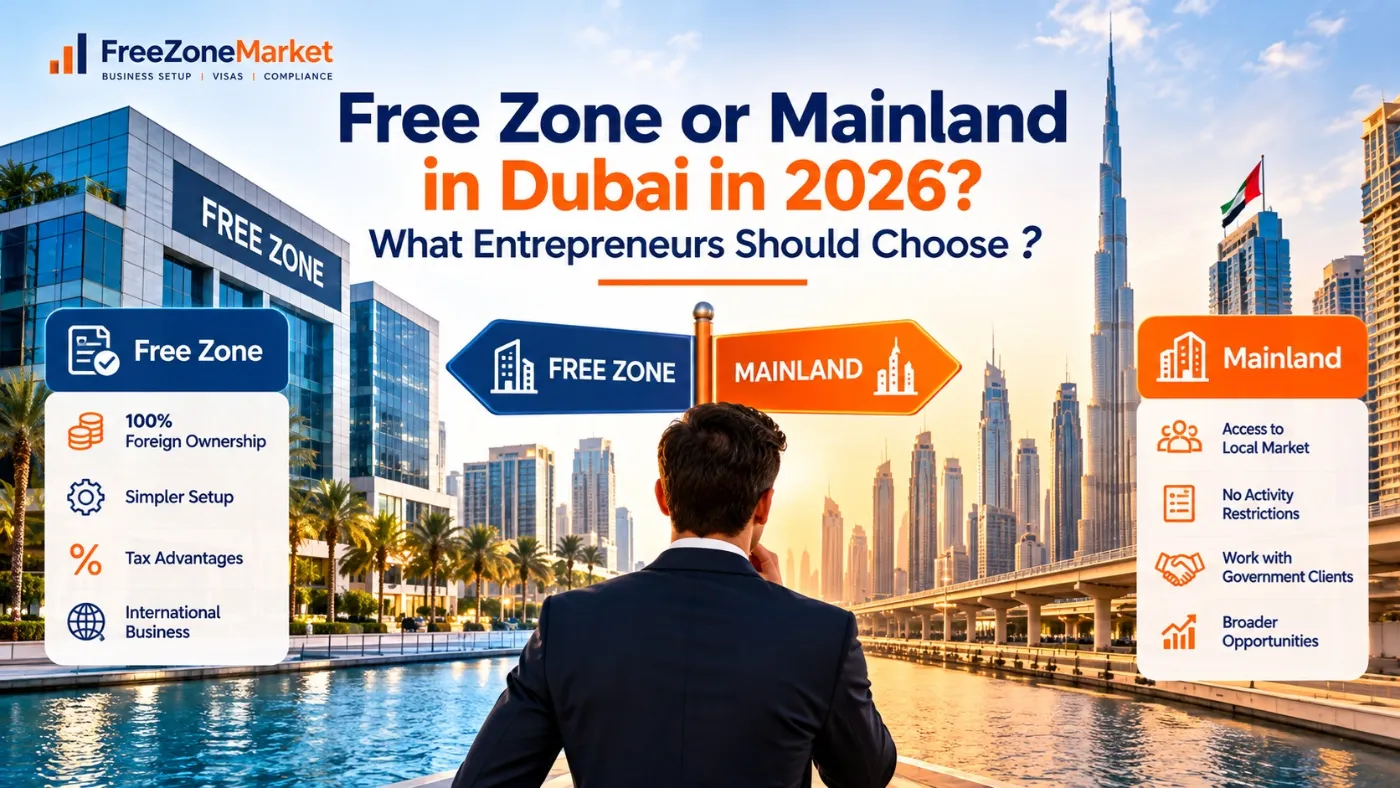
4. Mainland vs Free Zone: Which Is Better for a Food Business in Dubai?
Choosing between a Dubai Mainland company and a Free Zone company is one of the most important decisions when establishing a food business.
Business requirement | Dubai Mainland | UAE Free Zone |
100% foreign ownership | Generally available | Generally available |
International food trading | Available | Available |
Direct UAE Mainland distribution | Subject to licensing and approvals | Additional arrangements may be required |
Food manufacturing | With suitable industrial approvals | In appropriately equipped zones |
Warehousing | Available | Depends on Free Zone |
Investor residence visa | Subject to eligibility | Subject to eligibility |
Corporate bank account | Subject to bank approval | Subject to bank approval |
Dubai Mainland: Suitable for Local Food Distribution
A Mainland company may be appropriate for businesses planning to supply supermarkets, grocery stores, restaurants, hotels and other customers directly in the UAE.
It can also suit entrepreneurs establishing physical food production facilities, commercial kitchens or retail outlets, subject to the relevant licenses and approvals.
Dubai Free Zone: Suitable for International Trading
A Free Zone company can be an attractive option for businesses focused on international trade, regional distribution, re-export or commercial representation.
However, the ability to import, store and distribute food products depends on the selected Free Zone, licensed activities and applicable customs and food safety rules.
5. Best UAE Free Zones to Consider for Food Trading and Manufacturing
Several UAE Free Zones offer structures that may suit food industry entrepreneurs.
IFZA Dubai
IFZA may be suitable for entrepreneurs establishing international trading or related commercial service companies.
Food-related activities must be checked against the authority's approved activity list, and additional regulatory requirements may apply.
Meydan Free Zone
Meydan offers commercial licensing options that can be relevant to certain food trading businesses.
It may suit entrepreneurs seeking a Dubai-registered commercial entity without immediately establishing a large physical production facility.
Jebel Ali Free Zone (JAFZA)
JAFZA is particularly relevant for companies requiring access to port infrastructure, warehousing, industrial facilities and international logistics networks.
It may be an option for larger food importers, distributors and manufacturers.
Dubai South
Dubai South provides a logistics-focused business environment that may be relevant to companies with significant warehousing, freight and supply chain requirements.
RAKEZ – Ras Al Khaimah
RAKEZ offers commercial and industrial facilities outside Dubai and may be worth evaluating for manufacturing, packaging and distribution projects.
Important: Not every Free Zone license authorizes food manufacturing or physical food handling. The proposed activity, facility and approvals should always be verified before incorporation.
6. How Much Does It Cost to Start a Food Business in Dubai in 2026?
The cost of business setup in Dubai depends on the company activity, jurisdiction, number of visas and physical infrastructure requirements.
For entrepreneurs establishing an eligible commercial trading company, the following indicative entry-level license prices provide a useful starting point.
Free Zone | Indicative starting license cost |
IFZA Dubai | AED 12,900 |
Meydan Free Zone | AED 12,500 |
RAKEZ | AED 6,000 |
JAFZA | AED 15,020 |
Dubai South | AED 12,500 |
These are indicative commercial license figures, not complete food business setup quotations. They do not include all visas, regulatory approvals, premises, storage or operational expenses.
Additional Expenses to Consider
Depending on the business model, entrepreneurs should budget for:
Establishment Card and immigration-related charges
Investor and employee residence visas
Emirates ID and medical examinations
Food safety and product registration
Customs registration
Warehousing and cold storage
Industrial or municipality approvals
Accounting, VAT and Corporate Tax compliance
Annual trade license renewal
A food manufacturing facility will normally require a substantially larger investment than a basic food trading company because of its premises, equipment and technical requirements.
Can You Set Up a Food Trading Company Without Agent Fees?
FZM Solutions offers eligible Free Zone company registration and license renewal at direct government registry costs, with no agent fees for these services.
Additional services, immigration fees, regulatory approvals and operational expenses may still apply.
This approach can help entrepreneurs reduce incorporation costs while receiving professional assistance with their UAE business setup.
7. How to Obtain a Food Trading License in Dubai: Step-by-Step
Step 1: Define Your Business Model
Determine whether the company will operate as a food importer, exporter, wholesaler, manufacturer, distributor or commercial intermediary.
Your business model will influence the license, approvals and premises required.
Step 2: Select the Correct Business Activity
Choose the activity that accurately reflects your planned operations.
Foodstuff trading, food manufacturing, packaging materials trading and food processing are not necessarily covered by the same license.
Step 3: Choose Mainland or Free Zone
Evaluate your target customers, business location, warehousing needs and distribution strategy.
Step 4: Register Your Company
Submit the required shareholder information, incorporation documents and company name application to the relevant authority.
Step 5: Obtain Food Safety Approvals
Depending on the activity, food businesses may require Dubai Municipality approvals, food establishment registration, product registration, facility inspections and other permissions.
Step 6: Arrange Customs and Logistics
Companies importing physical goods should assess customs registration, shipment documentation, warehousing and distribution requirements.
Step 7: Open a UAE Corporate Bank Account
Banks generally review the company's ownership, business model, transaction profile, source of funds and commercial documentation.
FZM Solutions provides banking assistance, although account approval remains at the bank's discretion.
Step 8: Obtain Residence Visas
Eligible investors and employees can apply for UAE residence visas, subject to immigration requirements and visa allocations.
Step 9: Maintain Corporate Compliance
After incorporation, the business must comply with applicable bookkeeping, tax filing, license renewal and food safety obligations.
8. Food Import Regulations and Dubai Municipality Requirements
Food businesses operating in Dubai must pay particular attention to food safety regulations.
Depending on the products and activities involved, requirements may include:
Food Product Registration: Imported or locally produced food items intended for the UAE market may need registration in the applicable food registration systems.
Food Labelling: Products must meet applicable labelling standards, including relevant information on ingredients, allergens, expiry dates and origin.
Food Establishment Approvals: Warehouses, production facilities, kitchens and other premises involved in food handling may require approval and inspection.
Import Documentation: Food shipments may require customs declarations, health certificates, certificates of origin and additional product-specific documents.
Storage and Transportation: Refrigerated and frozen products must meet applicable cold-chain and food transportation standards.
Some product categories, such as meat, dairy, dietary supplements and specialized foods, may be subject to additional requirements.
Ensuring compliance before importing products can reduce the risk of shipment delays, rejected consignments and unexpected expenses.
9. Can Foreign Entrepreneurs Open a Food Company in Dubai Remotely?
Yes. Many commercial companies can be incorporated in the UAE while the shareholder remains abroad.
Depending on the jurisdiction and ownership structure, incorporation documents may be submitted electronically.
However, the process is not necessarily entirely remote.
Obtaining a UAE residence visa generally involves medical examinations and other immigration formalities requiring physical presence.
Corporate bank account opening may also require identity verification, additional documentation or in-person procedures.
Entrepreneurs attending Gulfood Manufacturing can use their visit to explore business opportunities and meet potential partners while planning the administrative steps of establishing a UAE company.
10. Why International Food Manufacturers Are Considering UAE Expansion
Food businesses from Europe, Asia, Africa and other regions may find opportunities in establishing a UAE commercial presence.
For European companies, Dubai can provide a base for regional sales and distributor relationships.
For African agricultural exporters, the UAE may offer opportunities to access additional importers, wholesalers and international trading partners.
For Asian food manufacturers, Dubai can support regional market development and logistics coordination.
For food technology and packaging companies, the UAE offers potential customers across manufacturing, distribution, hospitality and retail.
The business case will depend on market demand, regulatory requirements, shipping costs, distribution margins and the company's ability to develop sustainable commercial relationships.
11. Why Choose FZM Solutions for Food Industry Business Setup in Dubai?
Establishing a food trading or manufacturing company requires more than obtaining a trade license.
Entrepreneurs must consider regulatory requirements, customs procedures, business banking, residence visas and ongoing corporate compliance.
FZM Solutions through FreeZoneMarket.ae, assists international entrepreneurs with business incorporation and corporate administration across the UAE.
Our services include:
Free Zone company formation in Dubai and other emirates
Mainland company incorporation
Business activity and jurisdiction selection
Investor and employee residence visa assistance
Corporate bank account opening assistance
Trade license renewal
Accounting and bookkeeping
VAT registration and filing
Corporate Tax registration and filing
Audit coordination and regulatory compliance
Corporate amendments and liquidation
Our advantage: Direct Free Zone government registry costs, with no agent fees for eligible company registration and annual license renewal.
For food manufacturers and distributors, we can help evaluate the appropriate company formation options and coordinate the incorporation process, with specialized regulatory approvals handled by the relevant authorities.
12. Frequently Asked Questions (FAQ)
1. When is Gulfood Manufacturing Dubai 2026?
Gulfood Manufacturing 2026 takes place from 3 to 5 November 2026 at Dubai World Trade Centre. The event focuses on food ingredients, processing, packaging, supply chain solutions and industrial automation.
2. How can I start a food trading business in Dubai?
You need to select the appropriate business activity, choose Mainland or Free Zone registration, obtain a trade license and complete any applicable food safety, customs and product registration requirements.
3. How much does a foodstuff trading license cost in Dubai?
Indicative entry-level commercial licenses in certain Dubai Free Zones start around AED 12,500–12,900. The actual cost of an approved foodstuff trading license and any additional permits must be confirmed for the selected jurisdiction.
4. Can foreigners own 100% of a food business in Dubai?
Yes, 100% foreign ownership is generally permitted for eligible food trading and manufacturing businesses, subject to applicable licensing and regulatory conditions.
5. Which Free Zone is best for food trading in Dubai?
The most suitable Free Zone depends on the activity. IFZA and Meydan may be evaluated for eligible trading activities, while JAFZA and other logistics-oriented zones may better accommodate warehousing and distribution needs.
6. Do I need Dubai Municipality approval for food trading?
Depending on your business activities, products and facilities, Dubai Municipality registration, permits, product assessments or other approvals may be required.
7. Can I import food products into Dubai with a Free Zone license?
A Free Zone company may conduct permitted import-export activities, but bringing food into the UAE Mainland market requires compliance with applicable customs, food safety and distribution rules.
8. Can I start a food manufacturing company in a Dubai Free Zone?
Yes, provided the chosen Free Zone supports the relevant industrial activity and suitable facilities and approvals are available.
9. Can I obtain a UAE residence visa through my food business?
Eligible shareholders and employees may obtain residence visas through the company, subject to immigration requirements and the available visa allocation.
10. Can I open a corporate bank account for a food trading company?
Yes, subject to the bank's due diligence and approval. Banks may request supplier information, business plans, transaction details and evidence of commercial activity.
11. Is a food business in Dubai exempt from Corporate Tax?
Not automatically. The general UAE Corporate Tax rules apply, while qualifying Free Zone businesses may benefit from a 0% rate on qualifying income if all conditions are met.
12. Can I establish my food trading company in Dubai from overseas?
Many incorporation procedures can be completed remotely. However, residence visa formalities, banking requirements and certain regulatory approvals may require a physical presence.
13. Do I need a warehouse to start a food trading business?
Not every commercial food trading model requires a dedicated warehouse owned or leased by the company. However, businesses physically storing or handling food must ensure suitable, authorized facilities and comply with applicable requirements.
14. Can I sell food products directly to UAE supermarkets with a Free Zone company?
It may be possible through appropriate licensed distribution and customs arrangements. A Free Zone license alone does not automatically authorize unrestricted direct Mainland distribution.
15. Does FZM Solutions charge agent fees for Free Zone company formation?
FZM Solutions offers eligible Free Zone company registration and annual license renewal without agent fees. Government charges, visas, approvals and other services remain subject to the applicable quotation.
Conclusion: Turn Gulfood Manufacturing 2026 into Your Next Business Opportunity in Dubai
Gulfood Manufacturing 2026 offers international food entrepreneurs an opportunity to explore new technologies, meet commercial partners and assess business expansion in the UAE.
Whether you are planning to launch a foodstuff trading company, establish a food manufacturing facility, develop an import-export operation or expand your existing food brand into the Middle East, choosing the right UAE business structure is essential.
Dubai offers an internationally connected commercial environment, while the wider UAE provides a range of Mainland and Free Zone solutions for businesses of different sizes.
Attending Gulfood Manufacturing Dubai from 3–5 November 2026? Start planning your UAE company formation with FZM Solutions.
Explore business setup options, compare Free Zone and Mainland licenses, and receive guidance on the most suitable structure for your food industry business.
Ready to set up in the UAE? Talk to an advisor.
A free 30-minute call gets you a plan matched to your needs, with no obligation.